
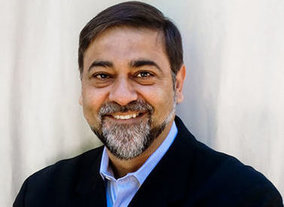
Last week, I attended the Intelligence Squared debate on the motion “Let anyone take a job anywhere”, with Open Borders guest blogger Bryan Caplan and tech entrepreneur Vivek Wadhwa speaking for the motion, facing conservative intellectual Ron Unz and migration policy wonk Kathleen Newland in opposition. I’ve already given my take on the debate: Bryan fought the good fight, but Unz and Newland threw up too many blatant inaccuracies and moral contradictions for any single debater to feasibly bat down in the time allotted. I said then that I thought Wadhwa was an ineffective advocate, primarily because he seemed like a moderate open borders supporter who hadn’t thought through things very well. I take that back: Wadhwa was not an effective speaker for the motion, primarily because he is a moderate open borders opponent who hasn’t thought through things very well at all.
I was originally thrown off by Wadhwa’s seeming endorsement of low-skilled migration during the debate: “if an employer thinks that this Mexican gardener is more qualified to do this job than someone else they can hire locally, let them do it.” Sure, Wadhwa endorsed Ron Unz’s proposal for a high minimum wage, even though Unz’s proposal is explicitly intended to bar most immigrants from coming — but paying lip service to the minimum wage is par for the course for any mainstream left liberal. What changed my mind was Wadhwa sending Bryan a harshly-worded missive which accused Bryan of failing the motion because Bryan used “silly analogies”, and failed to demonstrate how the US welfare system would provide for foreigners who come to the US. Wadhwa made it clear: “I do not advocate open borders.”
Bryan republished Wadwha’s missive on EconLog, at his request, and Wadhwa waded into the EconLog comments to defend his views. I give Wadhwa a lot of credit for this. Not many public intellectuals venture into blog comments, let alone get as deeply engaged as he did. However, I found Wadhwa’s elaboration even more disappointing than the seemingly-unwarranted missive he sent Bryan. Wadhwa first stated that he was upset with Bryan because Bryan made the focus of the debate turn on open borders, instead of “jobs”. What exactly Wadhwa intended to debate about “jobs” remains quite unclear to me, but his lack of clarity here explains in hindsight his unfocused opening statement at the debate. In response to his opening statement, Kathleen Newland chided Wadhwa that the motion was “let anyone take a job anywhere”, and not “let anyone take an anywhere job”.
I asked Vivek why exactly he opposes open borders. He’s made it clear that he wants to ban immigrants from coming to the US if they are going to work minimum wage jobs. But what is his alternative then? As I’ve written before, the primary alternative for immigrants and prospective immigrants if they are banned from coming is sweatshop or slave labour, at wages on the order of a few dollars a day, in workplaces where they run the risk of dying daily. If they can find a job here paying $8/hour (the approximate US minimum wage), I say bully for them. The remittances they send home to other poor foreigners already dwarf the foreign aid packages our governments send by 3 to 1. What humanitarian case is there for destroying the global flow of remittances and forcing hundreds of millions to live lives of sweatshop slavery?
When I posed these questions to Wadhwa, he responded:
Why do you assume that the best way of helping poor workers in Bangladesh and other developing countries is to bring them here to the US? Trust me, these people don’t want to leave their families and friends, culture, heritage, and homes to be here. They would rather stay where they are and make a living minimum wage.
It’s a neat story. But I have a hard time squaring this with the fact that immigrants routinely pay thousands or tens of thousands of dollars to be smuggled into the developing world, running the risk of death in the desert or on the high seas. If they are so happy at home, why are they doing these things? And why is it more humane for us to interdict them with gunboats, for the sake of banning them from earning the “inhumane” wage of $8/hour? Is that really the most humane thing we can do? What is inhumane about allowing these people to buy their own plane ticket, pay the government a visa fee or surtax, and come here to work for wages higher than they would ever dream of earning at home?
Mind you, it’s our guns and border fences that force Bangladeshis to choose between backbreaking farm work and murderous sweatshop hours. If you’re going to tell me this is more humane than allowing those Bangladeshis to seek minimum wage work outside Bangladesh, you’d better be prepared to defend it. Even if you think allowing these people a choice won’t actually result in much migration, simply the fact that these workers now have an opportunity to exit will force their employers to pay better wages and improve working conditions. Making some handwavy arguments about brain drain won’t cut it, considering the paucity of evidence of any tangible harms to the developing world from “brain drain”. The burden of proof here is high: you’re asserting that it’s basic humanitarian policy to point a loaded gun at an unarmed human being and force him to turn around, because the alternative of allowing him to go on his merry way in search of a better job is simply too inhumane to tolerate.
Wadhwa at this point departed the comments, but closed on a gracious note, with words of praise for Bryan (albeit, words I find hard to square with his missive, which claimed Bryan’s arguments failed to convince a single person). He also acknowledged that they were likely mismatched partners as a result of a misunderstanding about the motion’s wording. The discussion continued, though, with EconLog commenters trying to make sense of Wadhwa’s position.
It seems quite clear to me now that Wadhwa and Kathleen Newland from the debate are actually kindred spirits. Both believe that it’s inappropriate to permit immigrants entry unless the government guarantees them a social safety net of some kind — and that because it is impossible to extend a single country’s social safety net to every single human being, there must be strict border controls of some kind. Both favour relatively liberal immigration policies, but policies still very far from open borders: they essentially want the status quo, with slightly fewer restrictions.
Wadhwa and Newland seem to be adopting a territorialist view of some kind, whereby a government owes greater obligations to people within its territory, citizens or non-citizens, than it does to people outside its territory. This is why both favour legalising the US’s population of undocumented immigrants and why both believe it’s fatal for open borders to point out that a single government’s welfare system cannot guarantee equal benefits to every single person on earth. There seems to be “local inequality aversion” at play: Wadhwa and Newland feel uncomfortable about admitting more poor people to the US (Wadha calls this “importing poverty”) unless the government can guarantee these poor people socioeconomic uplift.
But moderate territorialism is actually quite compatible with open borders, just like moderate citizenism. During the IQ2 debate, Bryan’s retort to “but they’ll burden our welfare system” was to essentially say: “we can ban them from enrolling in welfare”. This is going to strike most people as too harsh. But more than that, it’s also not really necessary for most developed countries.
The extreme territorialist thinking that pervades mainstream discussions of immigration concludes that the moment we admit a foreigner to our territory, we assume strong moral obligations, especially socioeconomic ones, towards that person. One obligation might be, say, to ensure that every person in our territory is guaranteed a job at a good wage — perhaps one much higher than $8/hour. Now, I’m happy to admit that sure, we assume moral obligations of some kind. (Providing non-citizens the equal protection of our labour laws would be a good start!) But I reject the extreme territorialist view that our obligations to all people in our territory, citizen or not, are identical.
Open borders skeptics say it’s inhumane to allow people to starve in our streets. But we don’t need to see starvation in our streets under open borders: we can simply subsidise the return ticket home for poor foreigners who lose their jobs. Let’s say you reject that as too inhumane. But we don’t need to break the bank still; we don’t need to furnish foreigners with all the same guarantees we make to citizens. We can offer them a basic social safety net: access to some form of healthcare, perhaps unemployment insurance, etc. All these can be guaranteed at levels lower than what we guarantee natives, but levels that still prevent people from dying in our streets.
To put this concretely, government can restrict an immigrant’s access to the state’s retirement funds while still giving the immigrant basic healthcare coverage. Something similar is already the case in the US and most developed countries today. Few, if any, countries give foreigners equal access to their state benefits as they do to citizens — but similarly, few totally deny foreigners access to any benefits. Yet when economists look at the most generous welfare states, even Sweden’s, they find no evidence of the supposed looming fiscal disaster that immigration is supposed to cause. It is perfectly possible to say, as a moderate territorialist-cum-citizenist, that you support open borders with a limited welfare state for non-citizens. Feasibility is not an issue; this is the exact course our governments are already charting capably (though one could argue they could cut foreigners’ access to welfare more). Economists agree that with a limited welfare state, immigrants are not a fiscal burden.
This is not a hamhanded attempt to dismiss the implications of open borders for the welfare state. This is the ultimate implication of the moderate citizenist and moderate territorialist views that most people hold. If the state has to choose who to spend its limited resources on, there is a prima facie case for prioritising citizens. Newland breezily dismissed the claim that immigration restrictions are unjust discrimination against foreigners at IQ2 by saying: “I think our governments are obliged to discriminate in our favour.”
I completely disagree: if anything, governments are obliged to enforce labour and contract laws equally, without regard for national origin! What I am happy to say is that governments are obliged to discriminate in citizens’ favour when it comes to the social safety net. It seems absurd to me to take the stand Wadhwa and Newland have staked out: that it is just and moral to discriminate against foreigners in labour law, but completely unethical to discriminate against foreigners in the social safety net.
But this absurdity may yet be reconcilable, if you stretch territorialism and citizenism to their extremes. The flipside of territorialism and citizenism is that if someone is not currently in our territory, and not a fellow citizen, then they aren’t our problem. Sure, some bricklayer might be dying of cholera in Haiti right now — but that’s not my problem. I don’t live in Haiti, and he doesn’t live in my country. It’d be my problem if I lived in Haiti and elected the Haitian government — or if he lived in my country, subject to the administration of the government I elect. But otherwise, that Haitian’s poverty isn’t my problem, and he should bugger off.
As a result, the perverse conclusions that Wadhwa and Newland seem to endorse — that it is better to prevent the entry of an immigrant if we can’t afford to give him the same healthcare subsidies as a citizen — can actually make eminent sense. It’s not inhumane to use your guns and tanks to keep a poor person trapped in Haiti. You’re just preventing the Haitian government from “exporting poverty”. You’re preventing them from dumping their problems of poverty and squalor into your government’s lap. It’s not your problem; it’s Haiti’s problem!
But this completely denies the agency of individual migrants. No government forces these people to leave Haiti, or wherever they came from. The Haitian government can barely keep the lights turned on! They certainly don’t have the capacity to subsidise emigration or to brainwash their citizens into leaving, or to force their own people at gunpoint into boats headed for the US. And even if they did, so what? That is exactly what Cuba and Vietnam did to their own people, and the free world welcomed these people with open arms. In fact, that is what the US still does today for Cubans — allowing the Castro regime to dump the people it doesn’t want in the US’s lap.
That you have to jump through so many intellectual hoops to morally justify forcing people at gunpoint to turn away from your shores, on the basis that it’s inappropriate for them to work for the wage of $8/hour, suggests something is wrong with your thinking. These people spend thousands of dollars and risk their own lives in deserts or on the high seas to get those $8/hour jobs. That indicates strongly that what they’re fleeing is even more of a bum deal than minimum wage — perhaps, say, a sweatshop, or worse. How can anyone conclude that it is more humane to force these people at gunpoint to go back to a life — and quite possibly death — toiling away for cents an hour in a sweatshop somewhere, than it is to permit them to come in peace in search of minimum wage $8/hour jobs?
When our taxpayer-hired guns force unarmed civilians seeking work to turn back and go home, we make their poverty our problem as well. When they were suffering in Haiti, or Bangladesh, or wherever they came from, their troubles were of no consequence to us. We did not put them in the plight they faced, nor did we hinder them from uplifting themselves. But when they sought work from an employer willing to pay them a wage multiples of what they might ever hope to earn at home, we put our guns in the way. If we’re going to stop them from solving their own problem, we’d better damn well have a better solution to offer them. Nobody asked us to interfere with their job search; we took it upon ourselves to do this. It’s our duty to figure out what to do with these people now.
Now, Wadhwa and Newland believe quite strongly that a high minimum wage and greater foreign aid (or some other mechanism of “exporting prosperity”, as Wadhwa puts it) is the more humane thing to do. Wadhwa seems to think enforcing a “living minimum wage” in the developing world would slow immigration to a trickle. Supposedly this is the liberal solution to the conundrum of immigration; this is the fulfillment of the developed world’s responsibilities to the developing world citizens whom it has arbitrarily banned from its labour markets.
But are a high minimum wage, high levels of foreign aid, and government-enforced social justice in the developing world realistic options? How would we ever find the money to spend on the vast amounts of foreign aid that would be necessary to “level” the world economically, as Newland put it at the debate? How would the governments of the developing world build the capacity to enforce just labour laws — to say nothing of the capacity needed to enforce a high minimum wage? The answer is clear: Newland herself said at the IQ2 debate that there is no apparent way we can accomplish such “leveling”. So what’s the next least inhumane alternative?
Economist and mainstream liberal Paul Krugman once wrote a seminal essay justifying the toleration of sweatshops as the least inhumane thing we can do for the world’s poor. I excerpted Krugman for my piece on how open borders would abolish Bangladeshi sweatshops. His logic holds true as ever — but it really applies to immigration, not sweatshops:
You may say that the wretched of the earth should not be forced to serve as hewers of wood, drawers of water, and sewers of sneakers for the affluent. But what is the alternative? Should they be helped with foreign aid? Maybe–although the historical record of regions like southern Italy suggests that such aid has a tendency to promote perpetual dependence. Anyway, there isn’t the slightest prospect of significant aid materializing. Should their own governments provide more social justice? Of course–but they won’t, or at least not because we tell them to. And as long as you have no realistic alternative to industrialization based on low wages, to oppose it means that you are willing to deny desperately poor people the best chance they have of progress for the sake of what amounts to an aesthetic standard–that is, the fact that you don’t like the idea of workers being paid a pittance to supply rich Westerners with fashion items.
In short, my correspondents are not entitled to their self-righteousness. They have not thought the matter through. And when the hopes of hundreds of millions are at stake, thinking things through is not just good intellectual practice. It is a moral duty. (emphasis added)
I hope Wadhwa and Newland, and all the liberals who share their views, will do their moral duty, and think things through.
The photograph of Vivek Wadhwa used in the header of this post was taken by John P. Harvey and is licensed under the Creative Commons Attribution-Share Alike licence.


John Lee is an administrator of the Open Borders website. Liberal immigration laws are a personal passion for him. See all blog posts by John.

I was surprised by your assertion that “moderate territorialism is actually quite compatible with open borders.” But when you write that…
“Open borders skeptics say it’s inhumane to allow people to starve in our streets. But we don’t need to see starvation in our streets under open borders: we can simply subsidise the return ticket home for poor foreigners who lose their jobs.”
… I see what you mean, and I guess it’s actually true that DRITI could be described as moderately territorialist in a way. That said, it was never part of my proposal to *subisidize* the return ticket home. Rather, my idea was to require them to pay for it in advance. The point of DRITI is to capture the gains from open borders (or most of them), while holding natives harmless (not perfectly but for the most part).
But I would question these claims:
“We can offer them a basic social safety net: access to some form of healthcare, perhaps unemployment insurance, etc. All these can be guaranteed at levels lower than what we guarantee natives, but levels that still prevent people from dying in our streets.
“To put this concretely, government can restrict an immigrant’s access to the state’s retirement funds while still giving the immigrant basic healthcare coverage. Something similar is already the case in the US and most developed countries today. Few, if any, countries give foreigners equal access to their state benefits as they do to citizens — but similarly, few totally deny foreigners access to any benefits. Yet when economists look at the most generous welfare states, even Sweden’s, they find no evidence of the supposed looming fiscal disaster that immigration is supposed to cause. It is perfectly possible to say, as a moderate territorialist-cum-citizenist, that you support open borders with a limited welfare state for non-citizens. Feasibility is not an issue; this is the exact course our governments are already charting capably (though one could argue they could cut foreigners’ access to welfare more). Economists agree that with a limited welfare state, immigrants are not a fiscal burden.”
Given that a billion people living on $2 a day or less (or something like that), I think even the most miserly social safety net would be a major magnet for immigration. And you can’t say that the example of Sweden proves open borders with a social safety net is affordable, because Sweden doesn’t have open borders, or anything like that. If they did, there would almost certainly be far more immigrants, especially as diasporas accumulate and make the transition easier.
I’m basically with Bryan: we have to be tough-minded, and just say “No access to welfare for immigrants.” Or at least, for immigrants under the open borders regime, e.g., DRITI visaholders: if you want to keep some protected classes of immigrants, such as certain family reunification visas, and give them access to the welfare state, that’s OK. But unlimited immigration is inconsistent with even the most modest territorialist welfare state. Again, you CAN protect natives from falling wages through transfers, but that’s feasible precisely because you’re not extending those benefits to immigrants. In fact, under DRITI, on the contrary, you’re financing transfers to natives out of poor immigrants’ tax dollars! And the answer to people who find this hard-hearted is just to bang the drum louder and louder that they’re better off than they were at home, otherwise they wouldn’t come. You may sound like a broken record, but the plain fact is that revealed preference is an absolutely killer argument in this case, which absolutely crushes everything in its path. Some people are too dumb to understand it, but it’s so powerful that “if you understand it, you believe it” is hardly an exaggeration. The idea that we’re going to force people to live in poor countries for less than $2 a day their whole lives to protect them from a high risk of less dire poverty on the streets of American or European cities, the idea that we’re doing this for their own good, is ultimately too absurd, and frankly too disingenuous, to stand. DRITI could prevent people from actually dying of starvation in the streets, but we would have to get used to having a lot more visible poverty in rich countries, and comfort ourselves with the fact that open borders wasn’t creating the poverty, but merely removing a blindfold, while enabling us to see it more clearly.
Reply
I agree with comments from the earlier thread that the women analogy was extremely powerful. Unz and Newland simply had no good response to it. You doubled the labour supply — and yet, as Unz himself said, all the fields where women entered did not see incomes go down! What happened to “converting the minimum wage into the maximum wage”? Unfortunately the debate got sidetracked chasing this pointless minimum wage red herring, in part because Wadhwa’s nuanced views made him a less-than-effective partner for the open borders side.
Reply
Thanks for sharinf this is perfect blog for me bcoz I am trying to find more sources to get inspored.
Reply